
Have You Noticed Your Hair Whorl Looking Different Lately?
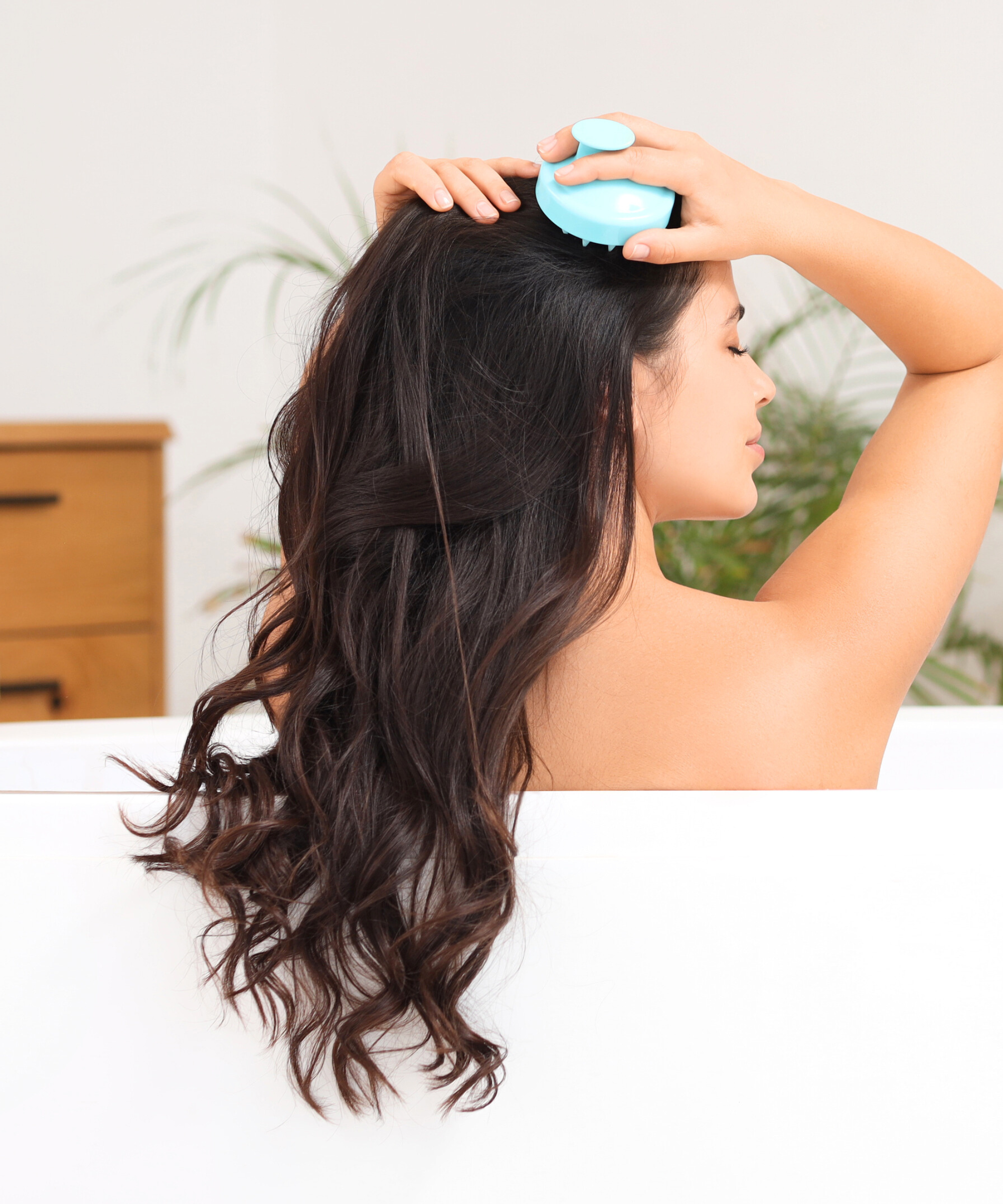
It’s been happening for a while. Every time I checked the back of my head after blow-drying, there it was: a long, deep line splitting my hair straight down the middle. Wide. Exposed. Impossible to ignore. My first thought? Sht. Am I losing hair?*
At first, I blamed my technique. Maybe I was blow-drying wrong. So I changed it. Nothing.
Then, I brushed my hair in every direction—forward, sideways, upside down. Five seconds later, the line was back. Horrendous.
I even braided my hair right over the spot, hoping to force it to behave. A minute later, I could see the hair splitting underneath the braid. My self-diagnosis (very official, obviously): hair loss.
I’m not a doctor, but that’s what I thought it looked like. So, I did what many of us do—I went online.
The internet generously offered me a “solution”: red onion therapy. It sounded natural. Harmless. Promising. Spoiler alert: it was none of those things. Not only did it fail, things went from questionable to disastrous.
The Hair Whorl Is an Early Warning Zone
The hair whorl sits in a very particular place on the scalp. It’s where oil glands are more concentrated. Where airflow is limited. Where hair naturally grows in opposing directions.
That combination makes it a perfect trap for things we don’t always notice right away:
moisture
excess oil
yeast or bacteria
product residue
So when something is off with the scalp, the whorl is often the first place to show it. It may:
open up
separate
refuse to lie flat
hold odor longer than the rest of the hair
It’s not vanity. It’s information, and like most signals the body sends, it tends to whisper before it shouts. This isn’t “your hair betraying you.” It’s your scalp saying: “Something changed. I need balance back.” And balance can be restored.
What Was really Happening to me?
I started noticing the whorl looking different, especially in the morning. Nothing dramatic. No pain. No obvious signs of distress. Just the hair splitting apart—wider than before, impossible to ignore once I saw it.
At the time, I knew nothing about the science of the whorl. So I did what many of us do when something feels off but not urgent enough to panic: I self-medicated. Onion juice.
The result?
Yeast. Inflamed follicles. Irritation entered the chat.
Now, I wasn’t dealing with just one issue—I had several. But the most unsettling part came after the onion juice treatment. Certain areas of my scalp started to hurt. Not metaphorically. Physically. I could barely touch them.
The only thing that brought relief? Washing my hair. What your body is trying to tell you.
That was my real wake-up call, and I knew it was time to stop experimenting and talk to an actual dermatologist. A real one. Not the internet.
The diagnosis: a yeast issue, possibly accompanied by a bacterial infection as well. And here’s the part that stayed with me—The problem didn’t start with the onion experiment. Something was already happening before that. The cowlick was telling me. I just didn’t understand its language.
the Real Solution
The best advice I can give you is simple: don’t do what I did. Red onion therapy may be helpful for some people with certain scalp conditions—but it wasn’t right for me. Every scalp is different, and what works beautifully for one person can make things worse for another.
That’s why a trained eye—a real dermatologist—is the only one who can accurately read all the clues, connect the dots, and determine the right treatment. This post isn’t here to diagnose or prescribe. It’s here to raise awareness.
If your hair whorl begins to widen, split, or behave in a way that feels unfamiliar, it’s worth taking seriously and addressing responsibly.
Our bodies speak long before they demand attention. How stress shows up physically (before we notice it)
Sometimes the message arrives quietly, through something as ordinary as hair refusing to behave. A changing hair whorl isn’t something to panic over—but it is something to respect. Notice it. Question it. Take responsibility for it. Awareness is not alarmism; it’s self-care. And listening early is often the simplest way to protect both your health and your peace of mind.
If you’re learning to listen to your body instead of arguing with it, you’re not alone. Inside the Wellness Vault, I share gentle, practical resources for tuning in earlier—before whispers turn into wake-up calls. No trends. No extremes. Just thoughtful guidance, saved in one calm place.
👉 Open the Wellness Vault
This post reflects my personal experience and is shared for awareness only. It is not intended to diagnose, treat, or replace medical advice. Scalp and hair conditions can vary widely, and only a qualified healthcare professional can provide an accurate evaluation and treatment plan. If you notice persistent changes or discomfort, please consult a doctor.
